
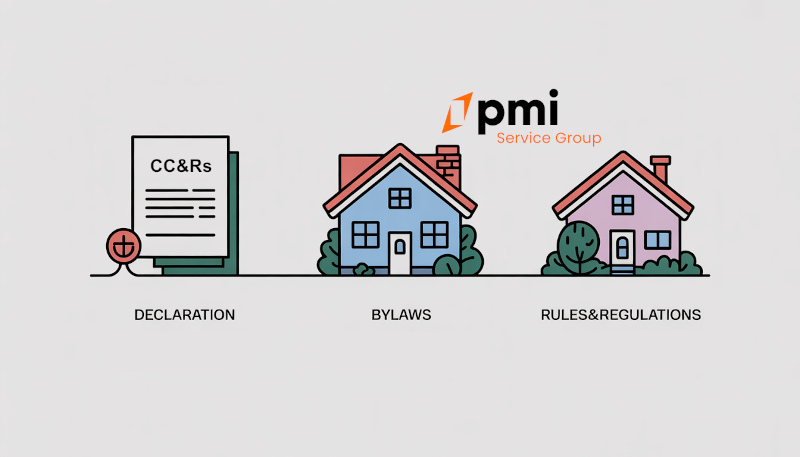
- The Declaration
- The Bylaws
- The Rules and Regulations
They are listed 1-2-3 for a reason. Think of an Association's governing documents like a hierarchy of laws. They range from the "Constitution" at the top to the "Daily Policies" at the bottom. Understanding the difference helps you know which document to check when you have a question about your rights or responsibilities.
- Legal descriptions
- Maintenance responsibilities
- Assessment obligations
- Wide-reaching ("big picture") restrictions
- How often meetings are held
- How many board members exist and how they are elected
- Voting procedures and quorum requirements.
- The duties of officers (President, Treasurer, etc.).
- Pool hours and gym etiquette.
- Parking restrictions.
- Fine schedules for violations.
- Pet weight limits or leash requirements.
About the Author
Paul is a founding partner of PMI Service Group and has more than 24 years of experience owning and managing investment properties in Illinois and Indiana. Paul manages the Association side of the business today, working with HOA homeowners associations, condominium associations and commercial properties throughout northern Illinois. His experience includes board governance, reserve planning, construction oversight, capital improvement projects, collections, and Illinois community association operations.
About PMI Service Group
Buy / Sell - We can act as your agent to sell your home. We will already be familiar with the home or your Community, so reach out if you are looking to buy or sell a property in the Association. We are a full-service real-estate brokerage company.
Rental Property Management - We specialize in property management for rental homes like single family, townhomes and condos.
Community Association Management - We also offer community management services for HOAs, Condominium Associations, commercial Associations.
Commercial Property Management - We offer full commercial or industrial building management.
We are going to put the same care and level of detail into any real-estate relationship for owners, boards and tenants as we do our own.
If you are in the suburbs of Chicago struggling to find a good broker or management company that cares about your property, please reach out. Every day we strive to elevate our services to be the best community management firm in the Chicago area for HOA. We serve Dupage County, Will County, Kane County and Kendall County in Illinois and our communities span from Sugar Grove to Burr Ridge, to Homer Glen to Elgin.
Contact us to discuss how we can help your community association! (630) 912-8742